
← All products

Product

Optical Imaging System

Cameras, lenses and lighting we design ourselves

Optical Imaging System — Cameras, lenses and lighting we design ourselves

What the algorithm cannot see is, in the end, what the optics failed to produce. DSTEK designs the optical train around the part and the defect. High-reflectance, transparent, curved and anodised surfaces — the ones other vision vendors decline — are where we start.

Imaging modes
2D / 2.5D / 3D / spectral
Surfaces
Reflective · transparent · curved · anodised · black rubber
Part size
A few mm to 3.3m
3D method
Line laser · structured light (1μm/pulse)

Optical Imaging System

Imaging modes

Five ways to make a defect visible, combined according to the part.

High-resolution imaging

Enough pixels on the defect to make a judgement possible.
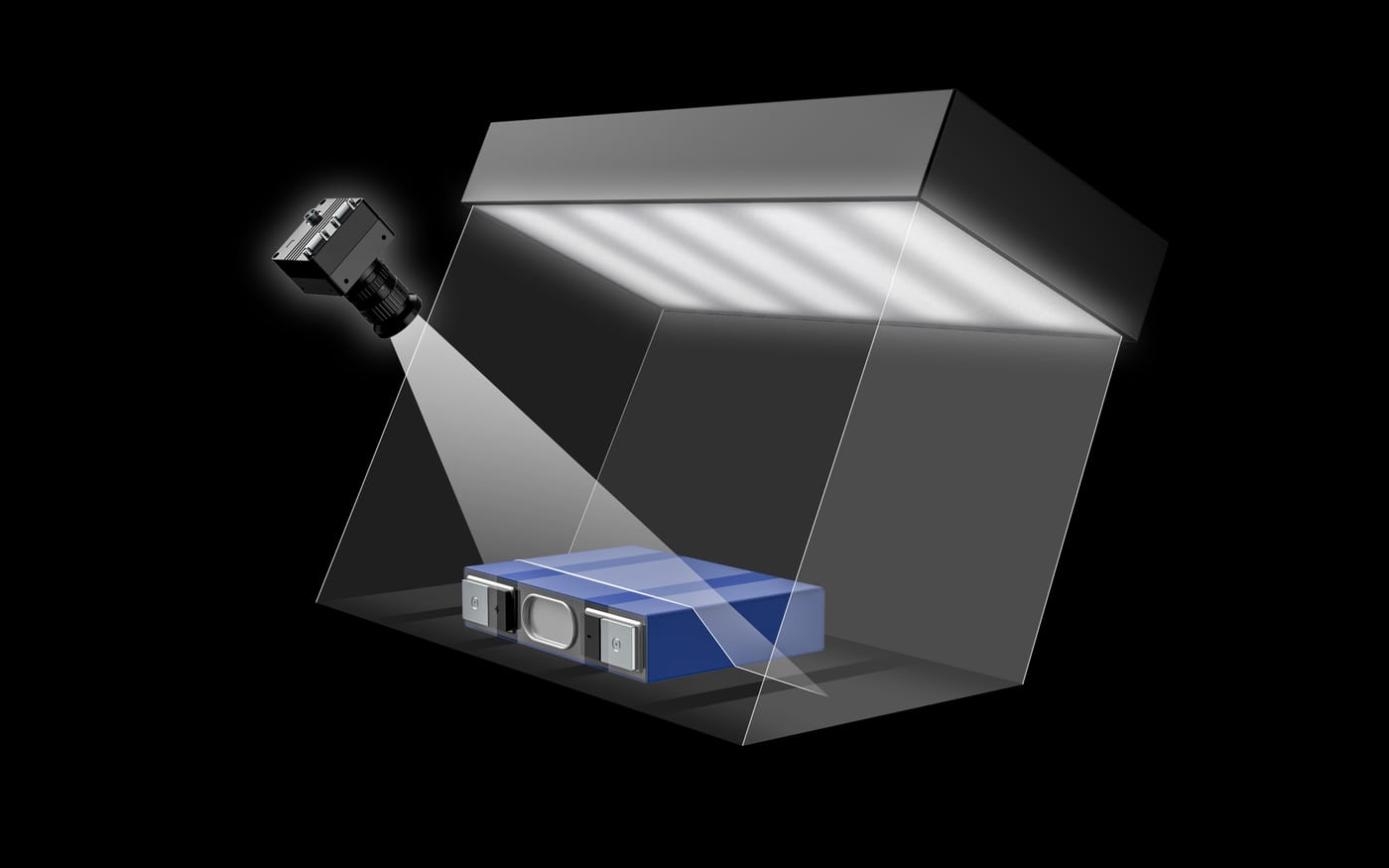
High-speed imaging

Full inspection without slowing the line.

3D imaging

Height, step and shape defects judged in three dimensions.

Ultra-sensitive imaging

Signal recovered under low light and low contrast.

Spectral imaging

Wavelengths beyond visible light separate materials and contaminants.

Optical Imaging System

Difficult surfaces

Conditions a standard optical module struggles to capture. Each is a part we have actually inspected, with the defects we caught.

  • High-gloss paint Automotive paint — contamination, runs, dents, orange peel
  • Mirror-finish metal Bearing raceways — pitting, scratches, indentation
  • Transparent cover glass Phone covers — scratches, foreign matter, dents
  • 2.5D curved glass Curved edges — micro-cracks, polishing marks
  • Anodised aluminium Laptop housings — colour variation, black spots, contamination
  • Black rubber Tyres and weatherstrip — bubbles, cracks, foreign matter
  • Translucent film Battery blue film — bubbles, creases, lifting
  • Die-cast machined faces Transmission housings — porosity, shrinkage, burrs
  • Silicon wafers Wafer edges — delamination, chipping, micro-cracks
  • Large panels (3.3m) Body stampings — cracks, necking, wrinkles

Tell us the inspection problem. We will start by telling you whether it is solvable.

Contact us